


Ever wondered how a Gorillaz live show works, with so many moving parts and band members? So did we, which is why we spoke to live music experts Dave Guerin and Colin Woodward, who have been working the sound for Damon Albarn and Jamie Hewlett’s animated band.
In the middle of their huge world tour, we sat down with Dave and Colin to ask why Damon finally made the move to in-ear monitors after years of saying no, why he now only chooses Cosmic Ears and how they can juggle a live show with over 50 different musicians on stage!
Can you introduce yourselves and tell readers a little about who you are and what you do?
Dave Guerin: I’m a Monitor Engineer. I’ve been working exclusively on monitors since March 1987 – that is before digital desks, before Garwood IEMs, and back when radio mics were still quite esoteric. You can see the full list of bands and artists I’ve engineered monitors for on my website, though I really ought to bring it up to date as Van Morrison is currently missing!
Colin Woodward: I’m the RF Tech for Gorillaz. Day-to-day, my job involves coordinating frequencies, maintaining and checking IEMs (I use an Audix TM2 with Smaart), and changing a huge number of batteries. I also manage the vast array of featured artists coming on and off the stage, making sure they have their IEMs, packs, mics, and anything else they need.

Dave, you’ve worked with Damon Albarn for over 20 years across a wide range of projects. Sonically, the Gorillaz sound must be very different from Blur or The Good, the Bad & The Queen. What challenges does that bring?
Dave: The first time I saw Blur was at Glastonbury 1994 on the NME stage, where I was one of two house monitor engineers working for Skan. The lineup that day included Spiritualized, Radiohead, Inspiral Carpets, Pulp, Chumbawamba, Credit to the Nation, Oasis, and Echobelly. I probably engineered monitors for a few of them, as bands didn’t often travel with their own monitor engineers to festivals back then.
In 1995, I teched monitors for Entec on Blur’s first UK arena tour, which is where I first met Matt Butcher, who is now the Front of House (FOH) engineer for Gorillaz. Fast forward a few decades, and after Morrissey and I went our separate ways in 2007 following four years of gigs, I got a call in the taxi on the way to the airport. Less than two weeks later, I was in Barcelona rehearsing with The Good, the Bad & The Queen (TGTB&Q). That was 19 years ago now – time flies!
Sonically, there are actually more similarities than differences. Gorillaz, Blur, and TGTB&Q all feature drums, bass, guitars, piano, and Damon’s vocals. They all have layers upon layers of sound that he created in the studio. He knows exactly which keyboard or guitar made a specific sound, as well as when, where, and who played it. My job is to reproduce those multiple layers on stage, whether through wedges and sidefills or, more recently, through IEMs.
The main differences come down to channel count and stage volume:
- TGTB&Q: Used d&b M4 wedges with no sidefills. We managed to fit everything onto a single SD rack – at least until the 60-piece choir turned up.
- Blur: Always required two SD racks, especially with the 16-piece choir. The setup consisted of M2 wedges, V sidefills, and C7 drum fills.
- Gorillaz: Utilises three SD racks, an Orange Box, and a selection of Optocore M8s. We started on M4s but have now moved to M2s alongside V sidefills.
Damon has famously resisted using in-ear monitors for his entire career. As his monitor engineer, what was the turning point that finally convinced him to make the leap to Cosmic Ears?
Dave: To be quite honest, I have no idea! We had just started a month of rehearsals in SW19 last August ahead of our four Copper Box Arena shows when he simply announced he wanted to try them. He’d had IEMs made previously when guesting with an all-IEM act, and I don’t think it was a great experience for him.
Fortunately, I had a mix and a pack ready to go, along with his new Cosmic Ears. His only comment after putting them in was, "This is easy." That was it. I think he asked for "delay" on the backing vocals about two or three weeks later – he meant reverb, which is a common way for musicians to describe it – but that was the extent of his adjustments.
During our first festival in September following the Copper Box gigs, he wasn't quite vibing with the atmosphere. I asked if he wanted more of a "party in his head," and when he said yes, I gave him a slight overall increase in level and dialled in more of the featured artist vocals from the track. In rehearsals, we’d had almost all the guest features performing live, and they bring an energy on stage that isn't always present on the playback track. Boosting those track features in his ears really helped bridge that gap.
What were his primary reservations about switching to in-ears after all those years? Was it a feeling of isolation from the crowd, the physical fit, or something else?
Dave: He has always maintained that he wants to be in the room with the audience, rather than off in his own world without them. To combat that isolation, we use eight channels of audience mics. They are easily the most active faders on my desk now.
How did he react to the sound difference the first time he put them in for a full live rehearsal or show? What elements of the mix does he appreciate most now that he couldn't get from wedges?
Dave: We already had nine live strings, a 32-piece choir, and six Middle Eastern and Arabic instruments running through his wedges and sidefills in glorious stereo, so he wasn't missing any elements previously. I suppose the main advantage now is that his mix doesn't change as he moves around the stage. Mind you, it also means the mix never changes when he moves around, so it is a bit of a trade-off!

Honestly, how much has your life changed – and how much have your stress levels dropped – now that the frontman is finally on a dedicated IEM mix?
Dave: I never get particularly stressed – you’re probably in the wrong job as a monitor engineer if you do! IEMs are simply another tool for delivering a mix to a performer. They have their own advantages and disadvantages, just like wedges and sidefills.
I do want to bust the myth that IEMs automatically save your hearing. Very few musicians keep their packs turned down. In fact, at our first festival with Damon on ears, I actually had to turn up the sidefill subs to balance his IEM mix because the mid-to-high frequencies coming from his ears were louder than the sidefills had been when they were his only sound source.
We also still have some featured artists who don’t use IEMs, so the sidefills and wedges remain in full use for certain songs. When they aren't needed for vocals, the sidefills run a different mix consisting purely of sub-bass.
Colin: For me, there is a tiny bit of added stress when Damon moves into the crowd while wearing ears. I’m always watching to ensure the cables aren't getting caught, pulled off, or lost. When he decides he wants to go somewhere, he’s going to go! We need to ensure everything is physically secure and that the RF coverage accounts for any potential movement.
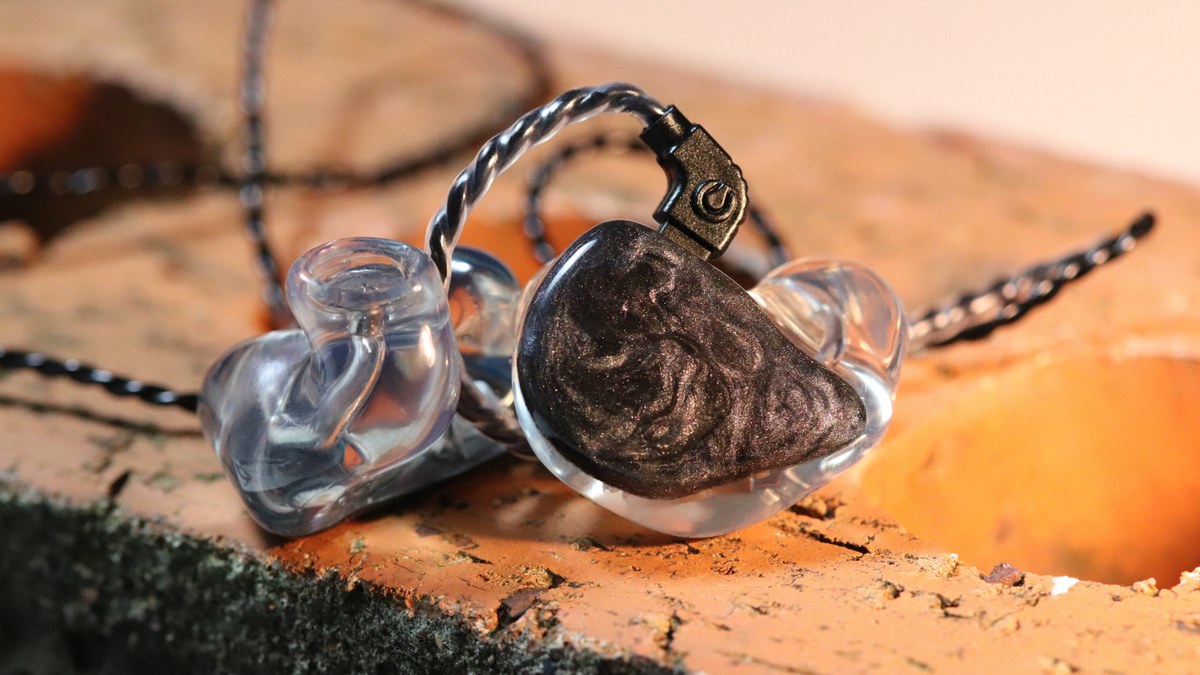
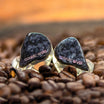
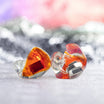
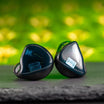
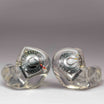
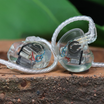
Cosmic Ears created a highly specialised build for Dave back in 2022 (a 4A/6A combo) and, more recently, for Colin, packing two 6-driver Reference IEMs into a single shell. How has this split-feed capability changed the way the crew communicates mid-show?
Dave: In addition to the musician mixes, my desk handles the crew shouts so we can all talk to each other during the show. That involves roughly 30 inputs and 10 outputs. The dual-IEM builds that Cosmic Ears engineered previously weren't actually for me; they were for Ali Viles and Ben Shapiro, the RF techs at the time. Now, it’s Colin’s turn to use them.
Gorillaz can be a very busy show, and seamless crew communication is vital. RF techs need to be able to listen to packs on different frequencies or line-check a radio mic before handing it over to a guest artist. That is exactly what the dual-circuit IEMs allow. Colin can have one side of his IEMs connected to a shout pack, while using an iPad to trigger macros on my desk to solo (PFL) specific channels. The other side of his IEMs remains free to monitor other packs on separate frequencies.
Damon, however, has absolutely no shouts or clicks in his ears – just the music. It’s crucial to keep him in a creative space where he can perform without worrying about technical chatter.

[Photo credit: Luke Dyson]
Colin: Cosmic made me a custom set with two independent sets of 6R drivers inside each earpiece, allowing me to connect to two separate packs simultaneously. I monitor Damon's mix for the most part on my shout channel pack. Dave has coded some highly clever iPad apps that grant me access to macros on the desk, which I use to toggle the monitor mix feed from my Spectera units on and off, leaving just the shout mics active.
Once that is done, I can plug the second set of drivers into anything else. It is incredibly useful for walking frequencies during tight changeovers when I need to communicate while actively checking packs. I don’t think there is a cleaner or better way of doing it.
Interestingly, you can easily detect tiny variations in delay between different sources. If Dave speaks over the shouts and routes it to a different brand or pack specification than the one I'm using for my main shout mix, I can instantly hear the phase difference. That doesn’t happen with identical packs, which proves the drivers in my 6Rs are remarkably well aligned.
Beyond Damon’s custom build, how has standardising the rest of the band and crew on Cosmic Ears custom IEMs changed the way the ensemble performs night after night?
Dave: Having everyone on the same IEM model is fantastic. We are using Sennheiser Spectera SEK packs, which allow us to monitor and remotely set the local pack volume for everyone. This means I can adjust my PFL levels so that what I hear matches what they hear. When a band uses a mismatched collection of IEMs with varying driver counts and impedances, monitoring their mixes becomes complete guesswork.
Colin: I’d add that the solid-shell manufacturing process Cosmic uses gives me real confidence in their durability. When musicians come off stage hyped up, they often just want to strip off their gear and relax, which can lead to some rough treatment. These solid shells hold up exceptionally well to accidents. We’ve all seen standard hollow-shell moulds hit the floor and instantly crack, but these are incredibly resilient.
Which Cosmic Ears model are you currently using at the desk, and what do you love most about the mix you get from them?
Dave: I’m currently using the Cosmic C8A. When I was using my older CE6B models, everything got a bit loud when I tried to match the band's levels and layer the crew shouts on top of them. With the C8A providing -26dB of ambient isolation, I am actually able to monitor at 2dB below the band’s operating levels. I can still clearly hear the shouts without being deafened and without losing an ounce of detail.
Follow Gorillaz on tour here.
 [Photo credit: Luke Dyson]
Want to take your live show to the next level like Damon Albarn and Gorillaz? Check out our full range of In-Ear Monitors and take the next step in your music career.
Related Articles
- Custom In-Ear Monitors vs Universal Fit: What’s Best for Live Gigs?
- Best In-Ear Monitors for Touring Musicians in 2026
- Why Summer Heat and Touring Make Custom IEMs Essential