

In Brief: Upgrading your on-stage sound to in-ear monitors is one of the best decisions you can make for your live shows, studio sessions and long-term hearing health. But between driver counts, crossover networks, universal fits and custom ear moulds, choosing your first set can feel a little overwhelming. Here’s your ultimate beginner's guide to cutting through the technical jargon and beginner mistakes to find the perfect pair of IEMs for your ears, stage role and budget.
Congratulations! You’ve decided it’s time to retire your stage wedges and upgrade your sound. Or perhaps you’re fed up with living with budget earbuds that slip out the moment you move around the stage.
Moving to in-ear monitors (IEMs) is a true rite of passage for every musician, vocalist and sound engineer. Instead of shouting over a wall of muddy guitar amps and clattering cymbals, you get a clean, studio-grade mix delivered straight to your ears at a controlled, comfortable volume.
However, choosing your first set of monitors can quickly become confusing - after all, their prices range from £40 to over £1,000! What’s the difference between universal and custom in-ears? Do you really need eight drivers per side, or will three do the job? And what on earth is a Balanced Armature?
If you have already read our look at The £40 Trap: The Hidden Costs of Cheap In-Ear Monitors, you know that going ultra-cheap with disposable generic earplugs leads to bad sound, poor fits, potential hearing damage, lost ear tips and wasted cash. Buying your first proper set of in-ear monitors is a long-term investment in your music.
So, without any further ado, here’s everything you need to know to choose your first pair of IEMs!
Step 1: Universal Fit vs Custom Fit
Your first decision is whether to choose a Universal Fit or a Custom Fit monitor. Here are some reasons why Universal or Custom fit in-ears might work best for you…
1. Universal Fit (Generic)
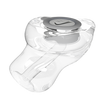
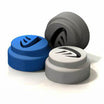
Universal IEMs use interchangeable silicone or memory foam ear tips to create an acoustic seal inside your ear canal.
The Pros: Ready off the shelf with zero waiting time, no audiologist or ear-fitting required and generally more budget-friendly. They're an ideal entry point for musicians dipping their toes into in-ear monitoring, or a reliable backup set in your gig bag.
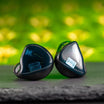
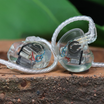
The Cosmic Option: Check out our new CU Range – hand-assembled at our Manchester HQ in Solid Acoustic Mass Shells (SAMS) using the same ModTec™ balanced armature technology as our custom counterparts. Available in models spanning from the C3U right up to the flagship C8U, the CU Range gives you signature Cosmic Ears sound without needing ear impressions taken first.
2. Custom Fit (Bespoke)
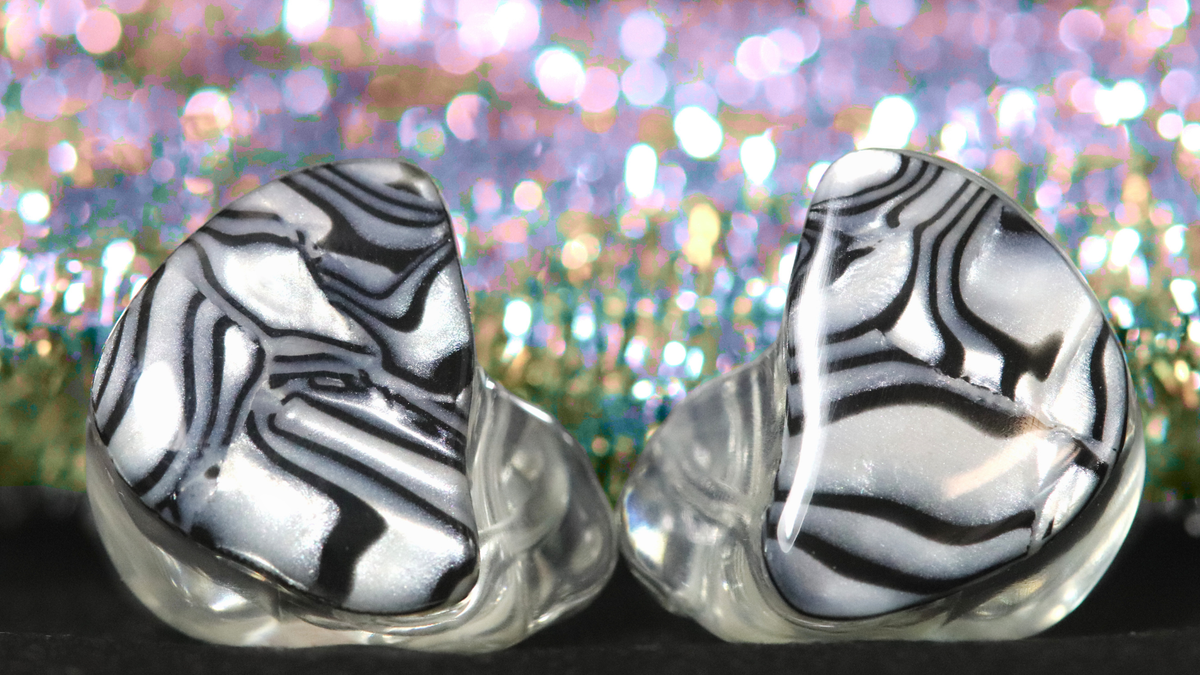
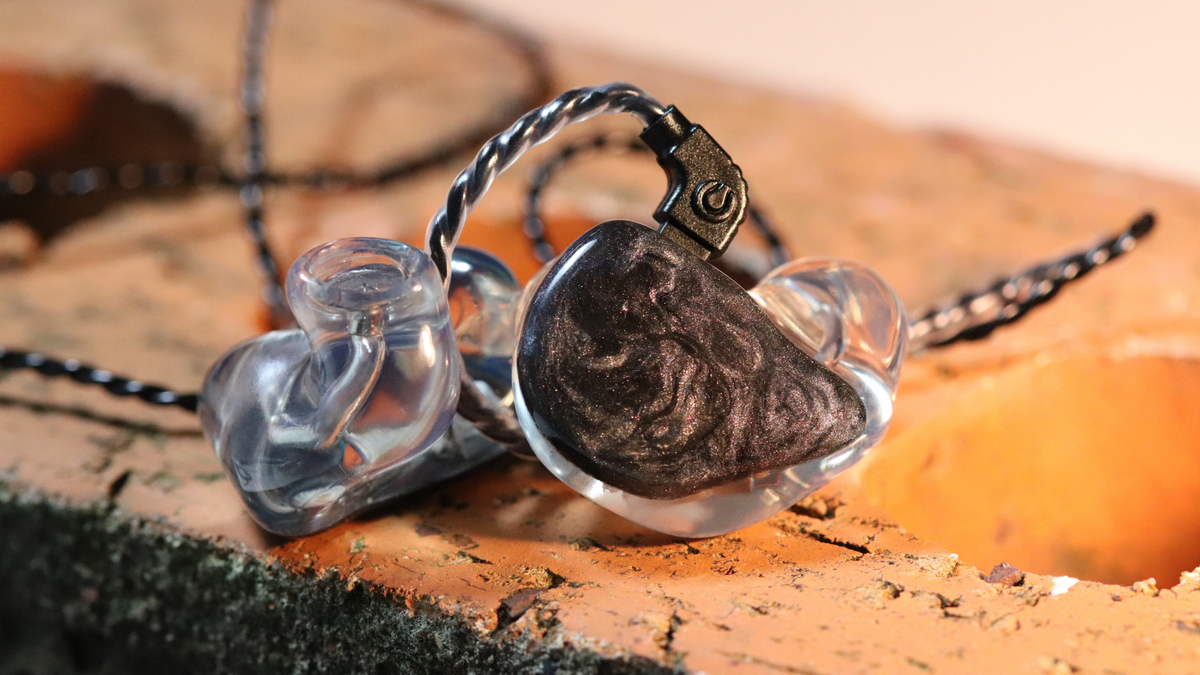
Custom IEMs are built from physical 3D moulds of your exact ear canals, concha bowl, and other key areas of your outer ear.
The Pros: Because they fit precisely into the unique contours of your ear, customs provide unbeatable comfort, an incredible lock-and-key fit (even when singing at full stretch) and -26dB of passive noise isolation. By eliminating air gaps, you retain maximum low-end bass punch and crystal-clear detail.
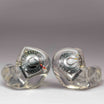
The Cosmic Option: Check out our bespoke Custom In-Ear Monitors (CA Range), fully customisable with your choice of faceplate finishes and even band artwork or logos.
For a deeper dive into which format fits your touring schedule, check out our guide on Custom In-Ear Monitors vs Universal Fit: What's Best for Live Gigs?.

Step 2: Choose Your Drivers
One of the biggest mistakes first-time buyers make is assuming more drivers simply means 'better' sound. Driver configuration is about frequency distribution, headroom and soundstage detail – not just volume. Instead of standard dynamic speakers, professional IEMs use tiny, high-precision Balanced Armature (BA) drivers that work like a mechanical watch to capture fine detail and fast sound changes. Packaged into a solid, unified module via our ModTec System, these drivers deliver trademark clarity and flat phase response inside a durable ear shell built to handle life on the road.
To avoid overpaying for headroom you don't need – or under-speccing your low end – match the driver count directly to what you do on stage:
-
2 Drivers (C2A/C2S) – Entry level in-ear monitoring: With 1 low driver and 1 mid/high driver, the C2A/C2S is our most cost efficient custom in-ear monitor, popular with communication experts like referees and security professionals, but also for grass roots musicians and everyday users commuting or in the gym. A balanced but full sound.
- Best for: communication and everyday listening.
- 3 Drivers (C3U / C3A) – The Versatile All-Rounder: Featuring dedicated low, mid and high drivers, this setup delivers a vibrant, punchy, full-spectrum sound that captures instrument resonance without piercing high-frequency fatigue.
- Best for: Guitarists, keys players and gigging musicians entering the IEM world.
-
4 Drivers (C4U / C4A) – The Definition Specialist: Extra focus on upper-mids and highs brings crisp articulation and mid-range clarity, allowing you to monitor pitch and vocal harmonies effortlessly without harshness.
- Best for: Lead vocalists, backing singers, strings, keys and brass.
-
6 Drivers (C6U / C6A / C6R) – The Performer & Reference Standard: Dual low, mid and high drivers create an intricate, wide soundstage. The C6U/C6A is legendary for live stage performance, while the neutral-tuned C6UR/C6R delivers a flat, uncoloured response for exact source monitoring.
- Best for: Vocalists and live performers (C6U/C6A), or sound engineers and mixing purists (C6UR/C6R).
- 8 Drivers (C8U / C8A) – The Stage Powerhouse: Eight balanced armatures per side supply effortless headroom, fast transient recovery and deep, controlled bass response to handle kick drum sub-frequencies without distortion.
- Best for: Drummers, bassists and main-stage headliners.
Not sure where your instrument fits or what sound you need? Check out our interactive guide: Which Custom In-Ear Monitor is Best for You?.
Step 3: Choose Your Budget
Another key decision is your budget. Whether you go for off-the-shelf universal models or bespoke custom moulds, you need to factor in all the costs involved.
Universal Fit / Off-the-Shelf (CU Range) – Budget-Friendly & Fast
Lower entry price point with zero additional service costs.
- Pros: Excellent value for money, instant delivery, no audiologist fitting fees, and easy to pass on or retain as a secondary backup set. The CU Range delivers our flagship audio architecture without the extra cost of custom fitting.
- Cons: Universal ear shells rely on consumable foam or silicone tips that require occasional replacement to maintain an optimal acoustic seal over time.
Custom Fit / Moulded (CA Range) – Premium Touring Investment
Higher initial outlay plus a small local audiologist fee for taking physical ear impressions (moulds).
- Pros: Unmatched fit and comfort for long sets, lifetime acoustic consistency, peak passive noise isolation and complete cosmetic personalisation including custom faceplate art and finishes. Built as a dedicated piece of professional touring gear.
- Cons: Higher upfront financial commitment and unique fit, so these can’t be borrowed – custom ear shells are engineered exclusively for your ears, meaning you can’t sell these on.
If you’re thinking about in-ear monitoring for the first time or need gear straight away for an upcoming run of dates, we’d recommend starting with the universal CU Range. Alternatively, if you gig multiple nights a week, are the lead singer or want to invest in your sound long term, it makes sense to upgrade to our custom-moulded CA Range that delivers unmatched long-term returns in comfort, ear protection and stage performance.
How To Get Fitted for Customs
If you decide to make the move to custom-moulded in-ears, the process is straightforward:
- Design Your IEMs: Use our online configurator to choose your shell colours, faceplates and personalised case text.
- Get Your Impressions: Visit a local audiologist, check out our online dealers or book an appointment at our Cheadle Hulme HQ for impressions and a brew! The audiologist applies a soft, quick-curing silicone material into your ear to capture its exact shape.
- Hand-Crafted Precision: Send your impressions to our lab, where our technicians 3D-scan your moulds and build your bespoke monitors.
Check out our full step-by-step walkthrough on How to Buy Customs to get started.

Frequently Asked Questions (FAQ)
What’s the main difference between the CU Range and CA Range?
The new CU Range features universal-fit monitors finished with standard clear shells and silicone ear tips – ready to wear out of the box without needing ear impressions. The CA Range consists of fully custom-moulded in-ears built specifically from physical 3D impressions of your ear canals. Both ranges use the same tried-and-trusted hardware that’s used by some of the world’s biggest names including RAYE, Arctic Monkeys, Little Simz and more!
Can I plug IEMs directly into my phone or wireless receiver?
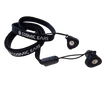
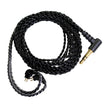
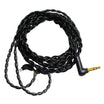
Yes! Cosmic Ears IEMs come with standard 2-pin detachable ProQ cables with a 3.5mm jack, making them compatible with wireless bodypacks, audio interfaces, headphone amps and mobile adapters. You can even use them to DJ!
Do universal IEMs fall out when performing?
Universal IEMs in our CU Range are housed in Solid Acoustic Mass Shells (SAMS) and come with interchangeable silicone tips to ensure a snug fit. If you’re particularly active on stage or sing at full stretch, custom IEMs (CA Range) provide a completely locked-in seal that will not budge.
How do I clean and care for my IEMs?
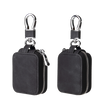
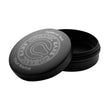
Wipe down your ear shells with a soft, dry cloth after every gig to remove sweat and earwax. Use the cleaning tool provided in your Shuttle case to clear wax from the sound bores. Never submerge your IEMs in liquid or leave them in damp gig bags!
Ready to Feel Your Music?
Whether you start your journey with our universal CU Range or go straight for bespoke custom-moulded monitors, making the leap to professional in-ear monitoring is an investment that transforms your stage confidence and protects your passion for years to come.
Check out our roundup of the Best In-Ear Monitors for Touring Musicians in 2026, or drop our friendly team a message today – we are always here to help you find your perfect sonic match!