


Know your BA from your DD, or your SAMS from your ModTec?
Well, don’t worry if you don’t, as that’s what this blog is here to explain!
Cosmic Ears is a highly technical company behind some of the best in-ear monitors (IEMs) in the world. But we know industry jargon can be pretty confusing when all you want is the best possible sound.
So, to break things down a little, here’s your plain-English guide to our Cosmic Ears technology, helping explain why our tech is the monitor choice for Arctic Monkeys, Fontaines D.C., Little Simz and more!
1. Balanced Armature (BA) vs Dynamic Drivers (DD)
Balanced Armature (BA): A Balanced Armature is like a fine mechanical watch, using tiny internal reeds to deliver ultra-precise micro-detail while resolving fine transients better than a dynamic driver's larger diaphragm. In terms of sound, BAs typically have lower distortion in their tuned frequency ranges because their motion is more tightly controlled.
We don't currently use DDs in our products, but we thought you’d like to know the differences.
Dynamic Driver (DD): A Dynamic Driver works like a classic speaker cone, pushing air to create bass you can physically feel (this is why ‘hybrid models’, ie a DD combined with BAs, can sound ‘bigger’ through the low end). The main issue is that DDs are notoriously large (not good for small ear spaces) and have lower sensitivity, meaning they need to be driven harder to generate more volume.

2. Crossover Networks & ModTec System
Imagine a situation where the bassist, singer and drummer all try to make themselves heard via a single megaphone at once – it's a muddy mess, to say the least. A Crossover acts like a stage manager, directing low notes to the bass driver, midrange to the vocals and highs to the tweeter.
To complement this, our ModTec System packages the individual balanced armature drivers and crossover into one solid and unified module, helping us deliver Cosmic Ears’ signature sound in every pair of in-ears. We’re also very proud to say our driver configurations are proprietary, developed after years of extensive research, development and A LOT of tweaking!
3. Driver Count: Is More Always Better?
Let’s go with a motoring analogy for this one. A V12 engine is fast, but a modern twin-turbo V6 or EV can easily outperform it through smarter engineering. Cramming 12 or 20 drivers into an earphone doesn't automatically equal better sound.
What matters is how those drivers are tuned and split across frequencies to deliver a natural soundscape without ear fatigue.
It’s also worth asserting here that sound is subjective. We have had customers come to us who are set on buying our most expensive model because they think the biggest (more drivers) and most expensive is the best, right?
But after listening to the demo models, they prefer a model with fewer drivers, or one that is less expensive. The lesson here is to trust your ears, not the driver count or price!
4. Ear Impressions & 3D Scanning
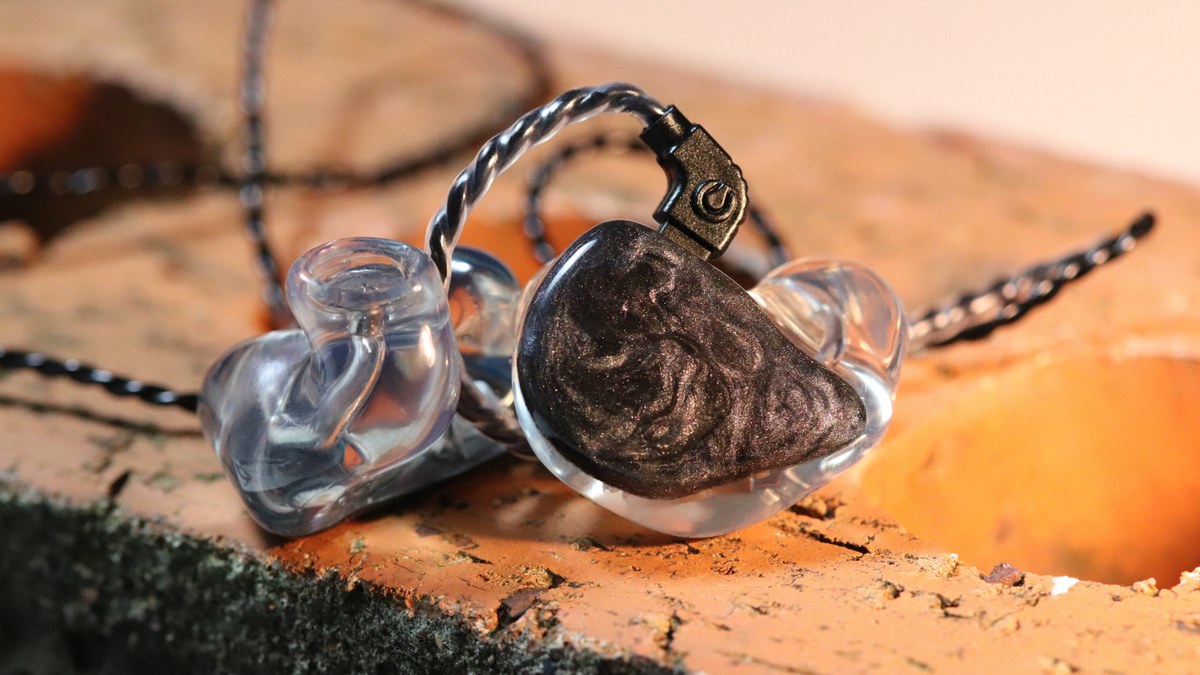
Our bespoke range of in-ear monitors use ear impressions and 3D scanning so that the monitors are the perfect lock-and-key fit for your ear.
To explain what that means, taking a physical silicone impression is like pouring concrete into a frame to capture the exact topography of your ear canal. 3D scanning converts that concrete block into a digital architectural CAD blueprint so engineers can build your ear shell with millimetre precision.
The result is a lock-and-key seal that isolates up to 26dB of stage noise while staying comfortable enough to wear for your performance (or even as an engineer or tech professional who needs to wear them for hours at a time).

5. Pro-Phase Technology
Imagine two people on a trampoline: if they bounce in sync, you go higher (constructive alignment). If one jumps down while the other goes up, they cancel each other out (phase cancellation).
Our Pro-Phase tech ensures that all the sound waves from your drivers reach your eardrum at the same microsecond, keeping your sound punchy and full rather than thin or hollow.
6. SAMS (Solid Acoustic Mass Shell) & SDM
Traditional IEM shells are hollow like glass jars – if you drop them on stage, they can crack. To fix that, we developed our own range of technologies.
SAMS: Sometimes the canal section can be the weak point when it comes to in-ears – which makes sense as it’s the thinnest part of your IEMs. So to fix this, we fill the internal space with a solid acoustic resin block. Drop our in-ears and they bounce. Problem solved! But please don't drop or bounce them for fun!
SDM (Shock Dampening Membrane): This protective layer sits inside the SAMS shell, cushioning the delicate internal drivers from accidental drops and tour-bus bumps.
7. TunR Acoustic Tuning
Every human ear canal has a unique shape that amplifies certain frequencies. To give each pair of in-ears the same Cosmic sound, we created TunR tech.
Our acoustic chamber design neutralises unwanted ear canal resonances before the sound hits your eardrum, giving you a smooth but musical response that matches how music sounds in a world-class recording studio. This does of course change depending on the model you choose, but check out our ‘Best for’ guide to see what our customers say.
Do you have any more jargon or technology you want explained? Let us know via social media or our contact page, and we’ll get it added to this blog!

Ready to Take Your Sound to the Next Level?
Discover the Cosmic Ears C8A or Explore Our Full Range of Custom IEMs to find your pair!
Further reading
- How To Protect Your Hearing During Festival Season
- Do In-Ear Monitors Improve Live Sound Quality?
- In-Ear Monitors vs Headphones: What’s Best for DJs?